What Are the Different Types of Scleral Lenses
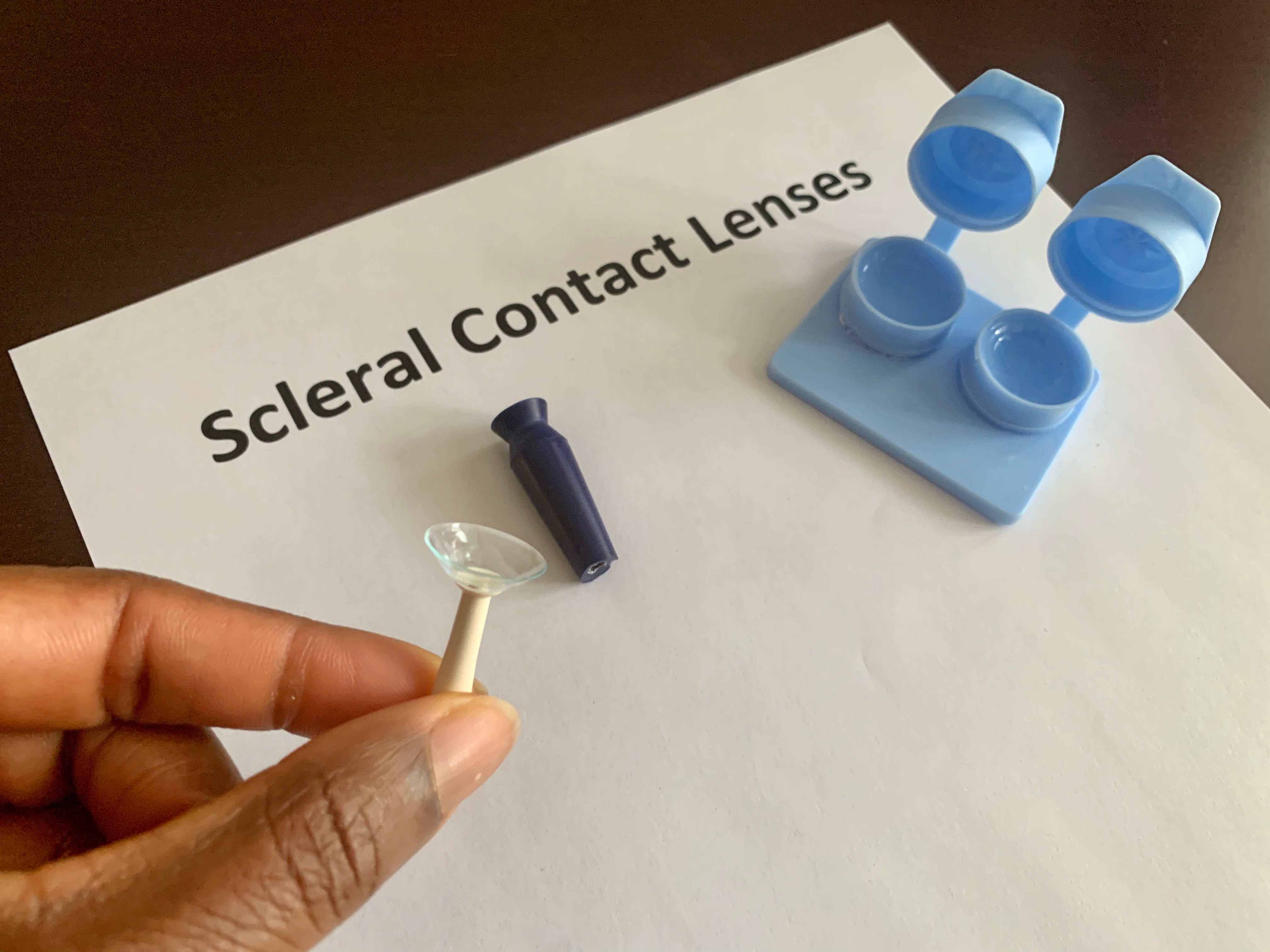
If regular contact lenses have not worked for you, scleral lenses might be a good option. These lenses are bigger and more stable than standard contacts, and they are made for people with special eye shapes or certain conditions. There are a few types of scleral lenses, each with its own use and size.
What Are Scleral Lenses?
Scleral lenses are firm, gas-permeable lenses. Unlike soft contacts that sit on your cornea, these lenses curve over it and rest on the white part of your eye, called the sclera. This creates a small space filled with saline solution, which keeps your eyes moist and comfortable. Because they do not touch the cornea, they work well for people with corneal problems or very dry eyes.
The Three Main Types of Scleral Lenses
Scleral lenses come in three main sizes. The main differences are where they sit on your eye and how much they curve over the cornea.
· Corneo-Scleral and Semi-Scleral Lenses
These are the smallest scleral lenses. They sit where the cornea and sclera meet. They are a good choice if you want the stability of a scleral lens but do not need as much coverage as the bigger types. They help with mild corneal problems and moderate dry eye.
· Mini-Scleral Lenses
These lenses are medium-sized. They arch over the cornea and rest on the front part of the sclera. Since they fully clear the cornea, they are useful for more serious corneal problems like keratoconus or after eye surgery. They are also easier to put in than full scleral lenses, making them a popular option.
· Full Scleral Lenses
These are the largest scleral lenses and cover the most area over the cornea. They sit farther back on the sclera, which creates more space between the lens and your eye. This extra space helps people with very irregular corneas or those who need more moisture for severe dry eye. They are very stable and almost never fall out by accident.
When Are Scleral Lenses Used?
Scleral lenses are not only for people who want something different from glasses. Many people need them for medical reasons. Common uses include keratoconus, where the cornea bulges into a cone shape. They also help with pellucid marginal degeneration, after corneal surgery, and severe astigmatism. People with severe dry eye often feel better because the saline keeps their eyes moist all day.
The Benefits Go Beyond Vision
For many people, scleral lenses do more than correct vision. They protect the surface of the eye, help it heal, and provide comfort that other lenses cannot. The saline keeps the eyes comfortable and helps wash away debris. Because they stay in place, they give clear, steady vision all day.
What to Keep in Mind
It may take a little time to get used to scleral lenses. You will need to practice filling them with saline before putting them in. They also cost more than regular contacts because they are custom-made. Still, for people who cannot wear other lenses, they can make a big difference.
Your eye doctor can help you find the type of scleral lens that fits your eyes and your lifestyle. With the right fit, scleral lenses can give you clear, comfortable vision and relief from conditions that make other contacts hard to wear.
To learn more about scleral lenses, visit Colonial River Eye Care in Midlothian, Virginia. Call (804) 794-4080 to make an appointment.
https://my.clevelandclinic.org/health/treatments/scleral-lenses


MAP
© 2026 Colonial River Eye Care. All Rights Reserved. Accessibility Statement - Privacy Policy - Sitemap
Powered by: